
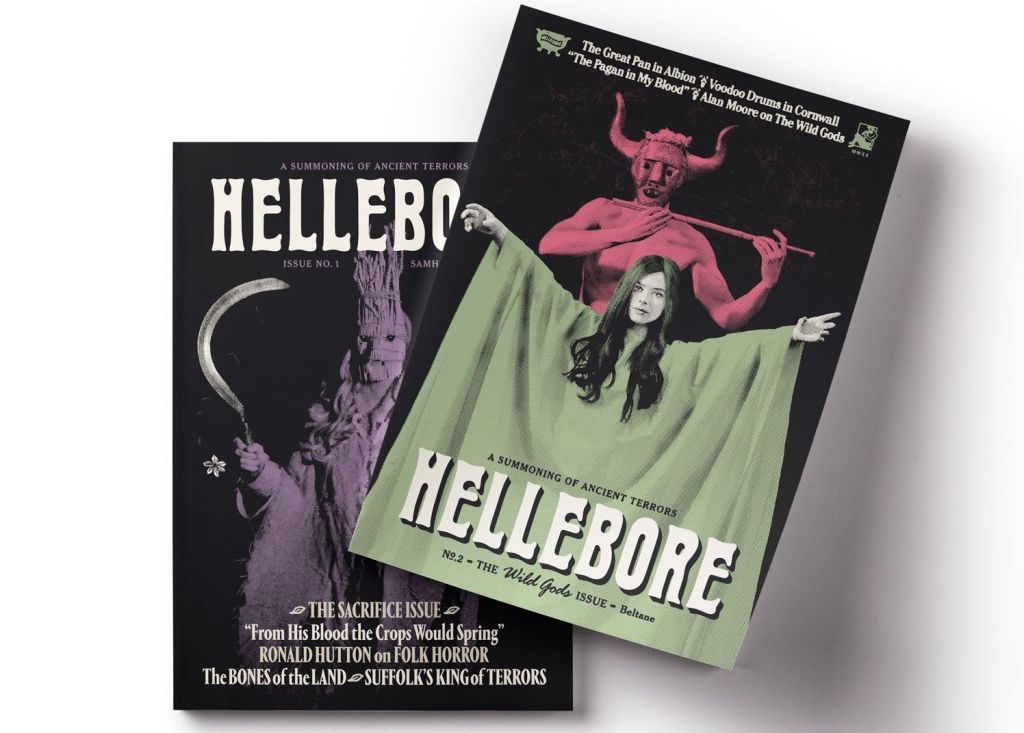
Hellebore is a marvelous print zine which describes itself as “a collection of writings and essays devoted to British folk horror and the themes that inspire it: folklore, myth, history, archaeology, psychogeography, witches, and the occult.” I frequently complain about a small but vocal number of gatekeepers who argue that true Folk Horror can only be set in Britain, so I want to emphasize that Hellebore‘s content is laser-focused on British culture because that’s their speciality, not because they advance exclusionary definitions.
Archaeologists and anthropologists are convenient characters in folk horror narratives because they slot right into a plot in which strangers arrive in a new place with the goal of uncovering the past. In Folk Horror, the place in question is usually rural and isolated. The inhabitants of this foreboding land often practice old magic or espouse beliefs the outsider ascribes to folklore or superstition. In these fictional stories, the archaeologist is directly or indirectly responsible for the running and screaming that consequently ensues on page or screen. Now, just because things tend to go a bit Midsommar onscreen doesn’t mean that in real life archaeologists can’t productively apply their training to the study of Folk Horror. With, one assumes, at least a little less bloodshed.
Archaeologists bring landscape and material culture into the conversation with a perspective that challenges the tendency we often have to romanticize wild places as being unaffected by human activity across time. And, of course, occult practices, agriculturally-focused traditions, and museum or archival collections all overflow with objects and artifacts beckoning us to ask questions or uncover contexts.
I’ve been reading Hellebore since the start and love the creative engagement with each well-defined theme and the artful balance of scholarly rigor and accessibility. Editor and founder Maria J. Pérez Cuervo, a freelance writer, editor, and archaeologist, clearly did a hardcore banishing spell to hold jargon and disciplinary insularity at bay because it’s rare to find a project of this nature that’s so consistent in this regard.
Katy J. Soar, a senior lecturer in Archaeology at the University of Winchester is a regular contributor, along with a fascinating roster of archaeologists, literary scholars, archaeologists, historians, folklorists, medievalists, artists, and more. I single out Katy Soar both to acknowledge her consistent contributions to this valuable public scholarship and so I can casually mention that I’ll have a review up in a few days of an extremely fun new volume sitting here on my desk, Strange Relics: Stories of Archaeology and the Supernatural, 1895-1954 (Handheld Press, 2022), which Soar co-edited with Amara Thornton.
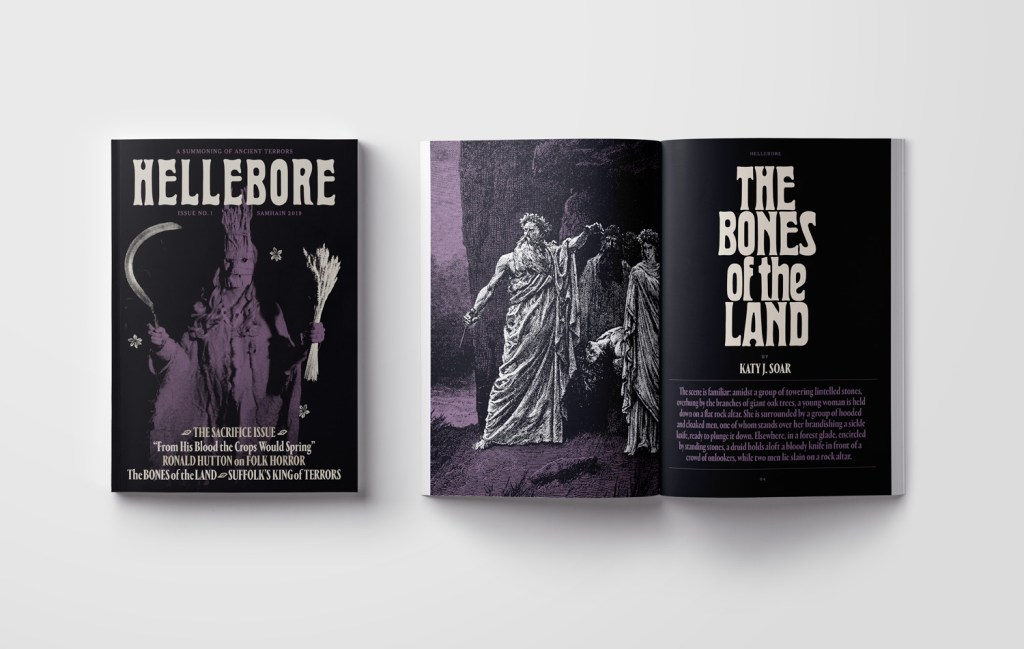
Hellebore is deviously tactile and highly portable, an A5 publication on silk coated paper that generally clocks in around 100 pages. These are handsome little books you’ll want to line up on your shelf alongside their standalone book, The Hellebore Guide to Occult Britain & Northern Ireland.
The first 7 issues are: 1) The Sacrifice Issue, 2) The Summoning Issue, 3) The Malefice Issue, 4) The Yuletide Special, 5) The Unearthing Issue, 6) Summoning Issue, and 7) The Ritual Issue. Hellebore is currently taking pre-orders for the imminent 8th issue, themed The Unveiling, and, as of this writing, back-issues are available individually or as a set.
Their submission guidelines are here and you can follow Maria on Twitter and Hellebore on both Twitter and Instagram.

 excavatinghorror.com