
I’ve been obsessed with the fun, bizarre, hilarious, infuriating depictions of archaeology in popular culture for decades & my notebooks are filled with notes on everything from blockbuster franchises to a legions of mummy films and craptastical SciFi Picture Originals/SyFy gems.
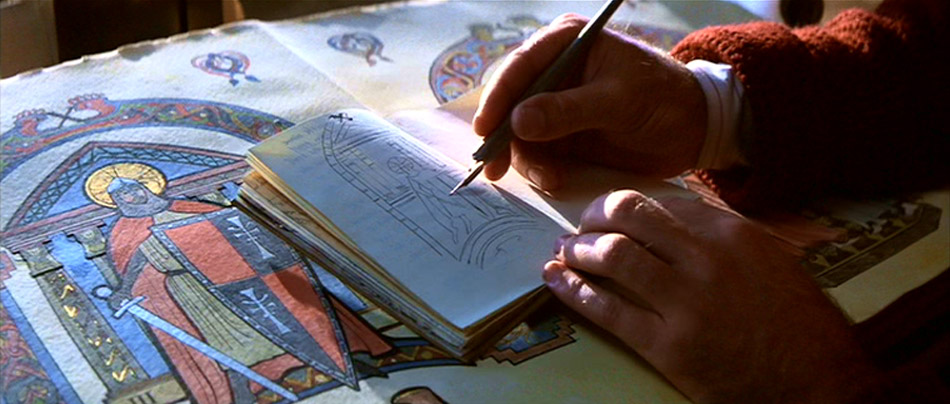
Depictions of archaeology in popular culture cross generic boundaries, so there’s lots of overlap here with action/adventure, science fiction, and fantasy movies & other media.
Regardless of their generic classification, these films frequently address themes familiar to Gothic and horror viewers, including, but not limited to: abjection, power, curses and doomed inheritances, identity, purity, transgression, corrupting or corrupted souls, racism, class, sexuality, colonialism, imperialism, environmental devastation, and impending apocalypse.
Related post: Some brief remarks about how archaeology operates in horror & action films.
This site focuses on movies & media where:
- archaeology figures prominently in the plot
- and/or the protagonist is an archaeologist
- titles such as The Exorcist (1973), in which the story is set in motion by archaeological excavation
- or The Omen (1976/2006), in which narrative resolution requires archaeological knowledge
- mummies – although few real-life archaeologists are Egyptologists, in fiction archaeologists and Egyptian mummies go hand in bandaged hand, so a lot of them shamble onto the site
- movies about cursed objects, dangerous books, arcane knowledge & related supernatural shenanigans involving material culture presented in a manner which connects it to archaeology/anthropology
- OR which identifies something as archaeology even if it’s not (looking at you, Triassic Attack).
Posts are primarily:
- Capsules – relatively spoiler free summary of a title, franchise, or series. (500 – 1000 words).
- Critical essays – a post discussing a specific trope, franchise, or production studio (1500 – 2000 words)
- Review essays – usually about a single film, novel, comic, game, etc. (1000-1500 words)
- Descriptive essays – an exploration of a filmmaking technique, industrial practice, real-life archaeological issue, or academic theory. (500 – 2000 words).
- Movie watches – a less structured post, likely reserved for the more craptacular films: they deserve commentary and (maybe) analysis, but also richly deserve a bit of snark on the side. (You can’t put a wordcount on this kind of magic).
As a Popular Culture scholar, I use training in Public Anthropology & Archaeology, Critical Theory, Cultural Studies, and Communications to analyze and critique this media this media in relation to its social and political contexts.
To be clear: my goal isn’t to make you feel bad for enjoying playing Tomb Raider.
Rather, my goal is to critically discuss how these tropes operate and how the underlying ideologies expressed in them have evolved in the context of popular culture, colonialism, and geopolitics.
For filmmakers, understanding how these tropes and stereotypes operate out in the world and what why their implications are troubling, and sometimes dangerous.
For archaeologists, understanding why certain movies get made and what makes the genre so culturally durable is an important tool for developing effective outreach strategies. Additionally, interrogating these tropes in relation to professional discourses facilitates our understanding of how these ideas infiltrate our own thinking and practices.
For everyone else, I hope you enjoy learning more about this niche in the horror genre and the variety of real-world issues and archaeological work with which it intersects, and perhaps carry some of these ideas with you the next time you watch one of these movies, visit a museum, or read about a “lost” civilization, treasure, or a cursed artifact.
And let’s be honest, a lot of these movies are Not Good. If nothing else, I hope you all find some fun new things to add to your viewing queue and/or are forewarned to save yourself from the horrors of Uwe Boll’s oeuvre.
You think looking directly at the the Ark of the Convent is bad news? You should try looking directly at Alone in the Dark (2005)!
(Please do not look directly at Alone in the Dark).
ACKNOWLEDGEMENTS
I’m indebted to a host of archaeologists, horror scholars, and film nerds for their feedback, encouragement, support – particularly those with whom I’ve discussed minutia, such as the runes in Curse of the Demon (ahem), late into the night at both the annual Popular Culture Association/American Culture Association annual meetings & by the pool at the Orlando Lakeside Marriott during the annual intellectual bacchanal known as the International Conference on the Fantastic in the Arts.
Thank you Becca Peixotto (Perot Museum, Director and Research Scientist of the Center for the Exploration of the Human Journey & Adjunct Instruction, American University Anthropology Department), Sara Casado Zapico (Graduate Program Director, FIU Professional Science Master’s in Forensic Science), Sean Moreland (Postscripts to Darkness & Part-time Professor, U of Ottawa), Kate Laity (Writer & Associate Professor, College of St. Rose), Leigha McReynolds (GWU Writing Instructor & @LeighaMcR), Meredith Guthrie (University of Pittsburgh), Derek Newman-Stille (Speculating Canada), my sister Ghost Girls Antares Russell Leask (@RealMrsLeask) & Tiffany A. Bryant (PCA/ACA Horror Area Co-Chair), Kristopher Woofter (The Hauntologist), Karl Sederholm (Chair, BYU Comparative Arts & Letters), and so many others!
EXTRA SPECIAL THANKS
Thank you to the splendid faculty I’ve worked with over the years at American University, especially Brett Williams, Rachel Watkins & Dolores Koenig (Anthropology), Despina Kakoudaki (Literature & Film Studies), Martin Shapiro & Christopher Lewis (University Library), Peter Kuznick, Alan Kraut, & the late Janet Oppenheim & Valerie French (History), and Patricia Aufderheide (Communications).
 excavatinghorror.com